
Megan K. Stack
My father died on a hospice cot in the living room, surrounded by his family, his books and records, and the chair where he’d read the newspaper every morning I could remember.
It was not a peaceful death. My father was just 58, and he was furious. When the nurse first dabbed a morphine-soaked sponge against his lips, he croaked: “You don’t have to drug me.” That memory doesn’t chill me any more. Now I marvel that even a tortured life was so precious that he clung to it, and that my father fulfilled the poet’s ideal by raging against the dying of the light.
“UFOs. They’re real, you know.” That was the last thing he said to me, possibly delirious, late at night, before his mind sank down into the wreckage of his body.
Did it strike him as the most significant thing he could say before it was all over? Did he realise it was over?
He died on an August afternoon in 1999, sun pouring into the yard. His family all gathered around, waiting for his heart to give. Finally, my grandfather – his father – walked in the front door and picked up his hand. My father made a noise, a cough or sputter, and it was done.
I’ve now spent more years with a dead father than a living one. Along the way, I’ve made peace with a complicated truth about my father’s death. It was both my hardest ordeal and the great catalyst of my life. Seeing this one, seemingly unshakeable person die woke me to my own mortality. It drove me to move quickly, constantly, fearlessly towards the things I wanted.
I would undo his death if I could. But the end of him was also the beginning of me. It set me on a path towards everything that I now hold most precious.
I was around 10, and my dad and I were walking in the woods late in winter. He reminded me of a Dr Seuss character – head bald and round, with chunky glasses and a fringe of black hair, his bulbous torso propped up by spindly, surprisingly quick legs. In my eyes, he was a man of adventure. After college and the army, he spent years in Europe, living in Spain so long he mastered the language like a native. Trotting to keep up, I asked a question I’d been pondering: How could I have a life as interesting as his?
“Whenever any opportunity comes up, any opportunity at all,” he said, “take it.”
That was the first and last time he gave me a piece of advice. I usually thought that he knew everything but, inexplicably, refused to tell me any of it. I’m not sure whether he realised how closely I watched him – that I picked up things he put down and studied them.
He was the first person I knew who read Jean-Paul Sartre, watched Federico Fellini, listened to Richard Wagner. But he never put specific books in my hands. When he watched a movie, you could join him or not.
My father communicated in jokes and small talk. He set up softball and croquet in the side yard and kitchen table marathons of Trivial Pursuit. He hosted barbecues that inevitably ended in rain or drove us to his parents’ place and released us into a crowd of cousins so he could drink beer with his dad. He took us to the movies, the beach and camping. He scared us with horror stories like The Monkey’s Paw. He kept things moving and kept them light.
I catalogued his habits. He played tennis, drank his coffee black with sugar, bought his beer by the case. He worked as a copy editor at the Hartford Courant. He was a registered independent who never said whom he voted for. He always had a roll of mint Breath Savers, and his steps jangled with loose change. He liked strong flavours – blue cheese, organ meats, the spiciest foods.
He hated doctors and dentists, giving us to understand that he’d endured unmentionable torments from 1950s dentists and overzealous army vaccinators.
He baked Valentine’s Day cookies filled with raspberry jam. He once nested orphaned baby field mice in a shoebox and tried to keep them alive, but they died. He never left the house without exuberantly kissing my mother on the lips and dropping a kiss on the heads of his three kids.
When I was a teenager, silence grew between us. I was eager for the world, and I didn’t want my parents to get in my way. The odd thing, I now think, is that they didn’t. My mother had convinced my reluctant father it was better to let teenagers sow their wild oats. The sense of my dad’s wordless disappointment, that I wasn’t dressing or acting or doing anything the way he thought I should, stank up the rooms.
I can’t explain him precisely; I can’t make him add up. He was warm and devoted. He was distant and fearsome. The eldest in a cheerful crowd of eight children, he didn’t quite fit in our comparatively claustrophobic family of five. It probably never occurred to him to converse with his children.
The puzzle of my father was the first great lesson in my life as a writer. He taught me the impossibility of truly knowing another human being, and the power of the one who tells the story.
My dad had a heart attack right at the end of my junior year in college. At the hospital, they discovered he had bladder cancer. He’d ignored the blood in his urine. The doctors thought they could operate. They cut him open only to realise the cancer had spread throughout his organs. The same traits that made him an unreadable father – the impulse to secrecy, to lock complications and difficulties away – would cost him years of life.
They closed him again like a box of hopeless things and announced that he was dying – more quickly, taking drugs to feel better, or more slowly, tortured by aggressive chemotherapy and radiation treatments. He chose the latter. He quit smoking, and I didn’t tell him I thought it was pointless, that he might as well enjoy his remaining cigarettes.
He got sick just as we’d started to address each other like adults with something in common. The year before his cancer was found, I’d been studying in Buenos Aires, writing home long, descriptive letters in a tone I’d never tried out on my parents before – my actual voice, delivered from the safety of far away.
After his diagnosis, we spent a long, uneasy summer at home in Connecticut. My mother cried almost constantly, which seemed to annoy my father, who had tacitly banned his own death from the house. In between my shifts at the coffee bar, I sat with my dad while he watched 60 Minutes or Jeopardy or listened to records. The only clue to the subterranean cataclysm was that we’d started saying “I love you” for the first time in years.
I tried to convince my dad that I should defer my senior year of college and stay home the next year, but he was adamant: I was his last kid, and he wanted to see me graduate. The doctors didn’t think he’d live that long, but he did. He made the trip to my campus in Washington, DC. He saw me win the departmental prize in Spanish literature – a language I spoke because, as early as I could remember, he spoke it to me.
My father had grown more demanding in his twilight months. Now that I’d graduated, he wanted to see me settled into sustainable employment.
I stayed in Washington, sharing the same illegal basement apartment with college friends and working at a Latin America think-tank, answering phones and translating academic papers. I was full of angst, unsure where to go or what to do next.
If I found a reporting job, I decided, both my dad and I would be satisfied. I’d been an editor at the college newspaper, and I missed the bustle of a newsroom. I mailed envelopes stuffed with my clips to newsrooms and cold-called city editors.
Finally, I was offered a job at the El Paso Times. It was an opportunity. Remembering my dad’s advice, I said “yes”. Before moving to Texas, I went home to Connecticut.
My father was sick and exhausted. My mother was overwhelmed by pre-emptive grief. My sister was driving up and down the turnpike from Boston, taking care of my parents and counselling me like a stand-in parent.
My father was nauseated and weak, but he insisted on taking me to the airport when I left. He gasped and fumbled as we walked to the gate. Finally, we sat side by side, staring out the wide windows at a drab airfield, and I felt his familiar silence thicken around us.
“I can’t stand it any more,” I finally choked out. “Please just go.” He ignored me. He stayed. I hugged him, afraid it hurt him. Then I hurried onto the plane.
I rushed into young adulthood as if I were fleeing over a burning bridge. There was no going back because everything behind me was falling apart.
A year slipped past. I’d adjusted to the bright, shellacked skies of El Paso, only to move away. I’d received another job offer, this time from The Associated Press in Dallas.
My parents pushed me to go. My dad kept getting sicker, but he was proud of my fledgling career. I tried not to let my feelings get hurt by the truth: They didn’t want me to take care of them. They wanted me to lighten their load by taking care of myself.
I’d been in Dallas less than two weeks when my mother called. “Come home,” she said. “It’s the end.” I drove to the airport along jammed freeways. The next time I saw this unfamiliar town of flashing surfaces and featureless office towers, I told myself, my father would be dead.
The grief was bright and sharp, shattering in the glare of the Texas sun, pecking back at me as I sat in the bureau, chopping newspaper stories to wire reports, wire reports to news briefs, news briefs to a few lines of broadcast. Learning to cut what could be lost and recognise what was essential.
I hadn’t anticipated yearning for my father, probably because I never truly believed he’d go.
I certainly didn’t expect the whole ordeal would make me feel free for the first time, but it did. Seeing an entire life go dark, and with it all the problems and creeping doubts it had contained, made each moment feel both grand and impermanent. Every day was suddenly vivid and mortal, tumbling towards the death of sunset.
Sometimes I’d work an overnight shift, then drive back to my apartment at sunrise to float under a cloudless sky in the courtyard swimming pool while my neighbours rushed past on their way to work. In grief I was suspended, out of sync, examining existence.
I met people during those raw months who are still good friends. I realise now that my co-workers felt sorry for me – it was a crazy way to start a new job – but, back then, I registered only that everyone was extremely nice to me.
Finding myself in the unfamiliar landscapes of Texas, working an adult job and living in my adult apartment fed the sense that, somehow, my father’s death had shuttled me into a new life. Everything was strange to me, and I wrote about it. No matter where I went, I never felt afraid; my worst fear had happened, and I already knew I was going to die. I worked constantly, with full attention, because it distracted me from the memory of my father at the end, all bones and angry eyes. I drugged myself with work, hid inside work, wrote in my spare time just to keep my mind fixed on something that had a shape.
All that work brought opportunity, and I always said “yes”. Houston, the Rio Grande Valley, immigration, courts, the death chamber. Then Afghanistan, Jerusalem, Egypt, onwards through the world. I didn’t mind working in dangerous places, among people killing and dying. Ever since I had watched my father die, I had found the margin between life and death oddly familiar. It was only when I had kids of my own that I felt true fear again, understanding that if I died, I could no longer protect them in this fickle life.
My dad never saw his grandkids, or met my husband. But he’s always come along with me in my mind; I’ve imagined him so vividly into family birthdays and board games that those scenes have ended up mingled with real memories. Sometimes, looking at my kids, I get the strange feeling they’ve met him already. Like my dad was just here. NYTIMES
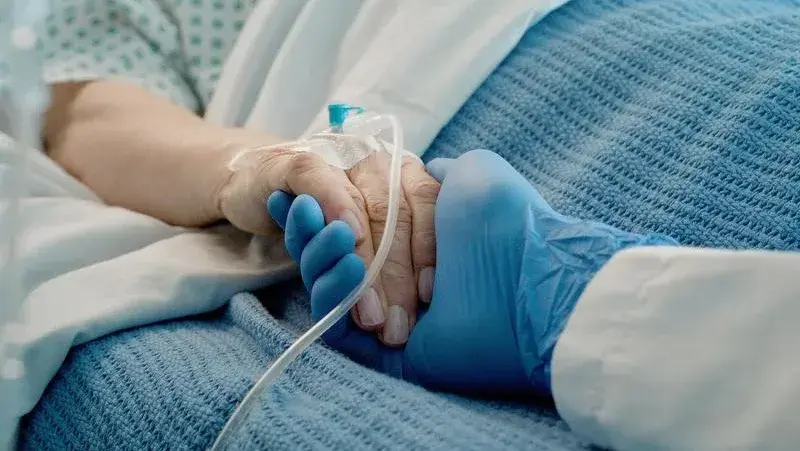
作者坦言,父亲的离去是她此生最煎熬的磨难,更是人生重要的转折点。这场离别促使她义无反顾、步履不停、勇敢无畏地奔赴心中所求。(配图来源:爱斯托克图库)
这是我此生遭遇过最痛苦的事,却也教会了我安身立命所需的一切。
梅根·K·斯塔克
父亲在客厅的临终疗养床上离世,家人围守在侧,身旁是他珍藏的书籍与唱片,还有从我记事起,他每日清晨读报常坐的那把椅子。
他走得并不安详。彼时父亲年仅五十八岁,心中满是不甘与愤懑。护士第一次蘸取浸润吗啡的海绵轻触他的嘴唇时,他沙哑着嗓子说道:“不必给我用药物麻醉。”如今这段往事已不再令我心生寒意。我反倒心生感慨,纵使一生历经万般苦楚,他依旧无比眷恋世间百态,如同诗人笔下所言,奋力反抗生命之光的悄然熄灭。
“不明飞行物是真实存在的,你要知道。”这是他对我说的最后一句话。深夜弥留之际,他意识已然恍惚,身心俱疲,生命也随之走向尽头。
弥留之际,他是否觉得这是人生落幕前最值得诉说的话语?他是否早已察觉自己大限将至?
1999年八月的一个午后,阳光洒满庭院,父亲永远离开了人世。全家人围在床边,静静等候他心跳停止。最后,祖父推门走入房间,握住了儿子的手。父亲发出一声轻咳,生命就此落幕。
如今,父亲离世后的岁月,已然超过了我陪伴他在世的时光。漫漫岁月里,我渐渐坦然接受了关于父亲离世这个复杂的事实:这场离别既是我人生最难熬过的劫难,亦是改写我人生轨迹的契机。亲眼见证这位看似坚不可摧的亲人离去,让我直面生死无常,也催着我抓紧时光,一往无前、无所畏惧地追寻心中向往。
倘若可以,我多想抹去父亲离世的事实。但他生命的落幕,亦是我全新人生的启程,引领我踏上旅途,奔赴如今我无比珍视的一切。
依稀记得那年深冬,我约莫十岁,和父亲漫步林间。他的模样像极了苏斯博士笔下的人物:头顶光秃圆润,架着粗框眼镜,鬓角留着一缕黑发,身形微胖,双腿纤细却步履轻快。在我眼中,他是满身阅历、热爱闯荡的人。大学毕业参军过后,他旅居欧洲多年,久居西班牙,说得一口地道流利的西班牙语。我快步跟上他的脚步,道出心中许久的疑惑:我要如何才能拥有和他一样精彩的人生?
他对我说:“无论何种机遇降临,哪怕只是微不足道的机会,都牢牢把握住。”
这是他赠予我的第一句,也是最后一句人生箴言。在我印象里,他仿佛通晓世间万事,却总不愿主动倾囊相授。我不曾知晓,他是否察觉我一直默默效仿他的一言一行,悄悄学习他身上的一切。
他是我认识的人里,最早品读让-保罗·萨特的著作、观看费德里科·费里尼的影片、聆听理查德·瓦格纳乐曲的人。可他从不会刻意将书籍塞到我手中,看电影时,我可随心选择陪伴或是独处。
父亲向来习惯用玩笑与日常闲谈倾诉心意。他会在院子里组织垒球、槌球游戏,陪着我们围坐在餐桌前玩通宵问答益智游戏;时常举办户外烧烤,而聚会总难免遇上雨天;也会驱车带我们去往祖父母家,任由我们和一众表兄弟姐妹嬉笑打闹,自己则陪着父亲小酌啤酒。他还会带我们看电影、去海边游玩、外出露营,讲《猴爪》这类惊悚故事逗得我们心生胆怯。他向来让日子过得轻松热闹,充满欢声笑语。
我默默记下了他所有生活习惯:热爱打网球,喝咖啡偏爱黑咖啡加糖,成箱购置啤酒;他曾在《哈特福德新闻报》担任文字编辑,秉持无党派立场,从不对外透露自己的投票倾向;口袋里总装着薄荷清口糖,走路时兜里的零钱叮当作响;偏爱重口味美食,蓝纹奶酪、动物内脏、极致辛辣的食物都是他的心头好。
他格外抵触医生与牙医,常和我们念叨,上世纪五十年代的牙医以及军队里强制接种疫苗的经历,给他留下了难以言说的痛苦阴影。
他会亲手烤制夹着树莓果酱的情人节曲奇饼干;也曾将失去双亲的小野鼠安置在鞋盒里悉心照料,可惜最后还是没能留住它们的生命。无论出门去往何处,他总会深情亲吻母亲的脸颊,再挨个亲吻三个孩子的额头。
步入青春期后,我和父亲之间渐渐变得沉默寡言。一心向往外面广阔天地的我,不愿被父母束缚脚步。如今回想起来,格外难得的是,父母从未刻意阻拦。母亲劝说固执的父亲,放手让正值年少的我肆意成长、闯荡历练。可我依旧能清晰感受到父亲无声的失落,我的穿搭打扮、言行举止、行事作风,无一符合他心中的期许,这份压抑的情绪萦绕在家中各处。
我始终无法透彻读懂父亲,拼凑不出完整真实的他。他温柔顾家,却又疏离威严。身为八个兄弟姐妹中的长子,在热闹和睦的大家庭长大,来到我们这个氛围略显压抑的五口之家,他始终有些格格不入。或许他从没想过,该如何静下心来和子女倾心交谈。
读懂父亲这份难解的心事,是我身为写作者学到的第一堂人生大课。他让我明白,人心终究难以彻底看透,也让我懂得了书写故事之人所拥有的独特力量。
大学大三期末,父亲突发心脏病,入院检查后确诊患上膀胱癌,而他此前一直刻意忽视小便带血这一身体异常症状。起初医生拟定手术治疗方案,可开刀后才发现,癌细胞早已扩散至全身脏器。他向来习惯将心事与病痛深藏心底、不愿倾诉的性格,最终耗尽了自己余生的岁月。
医生无奈缝合伤口,告知家人父亲时日无多:若依靠药物舒缓病痛,离世速度会更快;若接受高强度化疗与放疗,便能多活一段时日,却要承受无尽折磨。父亲毅然选择了后者,还下定决心戒掉多年烟瘾。我心中暗自觉得此举徒劳无功,倒不如随心抽完余下的香烟,却始终没能将心里话宣之于口。
就在我们渐渐学着以成年人的姿态彼此交心谈心之时,病魔悄然降临。确诊癌症的前一年,我远赴布宜诺斯艾利斯求学,时常提笔写下长篇家书,用从未对父母展露过的真实心境,诉说远方的所见所感。
确诊之后,我们在康涅狄格州的家中度过了漫长又压抑的夏日。母亲终日以泪洗面,这让本就不愿直面死亡的父亲满心烦躁。闲暇之余,我在咖啡馆打工之余,便陪着父亲一起看《60分钟时事杂志》《危险边缘》,或是一同聆听唱片音乐。往日隔阂尽数消散,多年未曾说出口的“我爱你”,也终于在那段时光里频频脱口而出,这也是我们情绪暗流涌动下唯一的温情慰藉。
我一心想要休学一年留在家里陪伴父亲,却遭到他坚决反对。他说我是家中最小的孩子,他一定要亲眼见证我顺利大学毕业。彼时医生都断定他撑不到毕业季,可他硬生生熬了过来,还专程赶赴华盛顿哥伦比亚特区参加我的毕业典礼。看着我斩获西班牙语文学专业奖项,他满心欣慰,而我精通西班牙语,也源于儿时他便时常对我讲起这门语言。
步入生命最后的岁月,父亲愈发期盼我能早日安稳立足、拥有稳定体面的工作。
毕业后我留在华盛顿,和大学好友合租在不合规的地下室公寓,就职于一家拉丁美洲智库机构,日常负责接听咨询电话、翻译学术文稿。彼时的我满心迷茫焦虑,看不清未来方向,不知前路该去往何方。
我暗自下定决心,若是能如愿拿到记者岗位,便是对自己和父亲最好的交代。大学期间我曾在校报担任编辑,格外怀念报社热闹忙碌的工作氛围。于是我四处投递自己的新闻稿件,主动致电各大报社编辑求职。
功夫不负有心人,我成功收到了《埃尔帕索时报》的录用通知。把握住这次来之不易的机会,谨记父亲当年的教诲,我毫不犹豫应允入职。动身前往得克萨斯州前夕,我回到了康涅狄格州的家中。
彼时父亲重病缠身,身心俱疲,母亲终日沉浸在提前到来的悲伤之中,心力交瘁。姐姐频繁往返于波士顿与老家之间,悉心照料父母,像长辈一般开导劝慰迷茫的我。
纵使身体虚弱、恶心难耐,父亲依旧坚持亲自送我前往机场。走向登机口的路上,他步履蹒跚、呼吸急促。最后我们并肩静坐,透过宽大的玻璃窗望着窗外萧瑟的机场场地,往日熟悉的沉默再次笼罩着我们二人。
我终于哽咽着开口:“我实在撑不住了,您先回去吧。”可他始终静静坐着,不愿离去。我小心翼翼拥抱了他,生怕触碰到他虚弱的身躯,随后便匆匆登上了航班。
我仓促奔赴成年世界,如同逃离一座岌岌可危的断桥,身后一切尽数崩塌,再也无法回头。
一年时光转瞬即逝,我渐渐适应了埃尔帕索明朗单调的天空,又迎来了新的工作机遇,成功入职达拉斯美联社。
父母全力支持我奔赴新前程。父亲的身体每况愈下,却依旧为我稳步起步的事业倍感骄傲。我渐渐明白父母的心意:他们并非想要我留下来贴身照料,而是希望我独自打拼、安稳立足,减轻家中的重担。
抵达达拉斯尚且不足两周,母亲突然打来电话,语气急切地让我即刻归家,告知我父亲已然弥留。我驱车行驶在拥堵的高速赶往机场,心中暗暗笃定,再次归来这座满是高楼楼宇的陌生城市时,父亲早已离我远去。
丧亲之痛尖锐刺骨,在得州烈日的映照下愈发浓烈。身处通讯社,我日复一日精简新闻稿件,将长篇报道压缩成电讯简讯,再凝练为简短广播文稿。这段经历也让我学会取舍,懂得舍弃无关紧要的琐事,看清生命里真正珍贵的事物。
我从未预想过自己会如此深切思念父亲,或许是内心深处始终不愿相信,他会永远离开我。
更未曾料到,这场生死离别,竟让我第一次挣脱桎梏、心生自由。亲眼见证一条鲜活的生命走向尽头,随之消散的还有过往所有烦恼与内心潜藏的迷茫,这一刻我恍然醒悟,人生每一刻既盛大璀璨,又转瞬即逝。往后的每一天,都鲜活真切,也都逃不过走向落幕的宿命。
我时常值通宵夜班,破晓时分回到租住公寓,独自在庭院泳池里静卧休憩,望着万里无云的晴空,看着邻里行人步履匆匆奔赴职场。沉浸在悲伤中的我,仿佛与周遭世界格格不入,静静思索人生百态。
那段满心伤痛的艰难岁月里,我结识了一众挚友,相伴至今。如今我才知晓,昔日同事都满心怜惜我的遭遇,深知带着丧父之痛开启新工作何其不易,可彼时的我,只真切感受到身边所有人给予的温暖善意。
孤身身处得州这片陌生土地,独自扛起成年人的工作与生活,我真切意识到,父亲的离世,彻底推着我迈入了全新的人生轨迹。周遭一切皆是陌生模样,我提笔写下所见所感。自此往后,我无所畏惧——人生最大的悲痛已然降临,我也早已看透生死宿命。我全身心投入工作,以此驱散脑海中父亲弥留之际身形消瘦、满眼愤懑的模样。我埋头伏案忙于工作,闲暇之余提笔写作,只为让思绪有所寄托,不再深陷悲伤。
兢兢业业的打拼为我迎来了无数机遇,而我始终坚守初心,牢牢抓住每一次机会。从休斯顿到里奥格兰德河谷,深耕移民题材、法院纪实、死囚纪实等各类新闻领域;而后远赴阿富汗、耶路撒冷、埃及,足迹遍布世界各地。纵使奔赴局势动荡、战火纷飞的险境采访,我也从未心生畏惧。自亲眼送别父亲离世后,生死一线之间的距离,于我而言早已不再陌生。直到后来我拥有了自己的孩子,心底才再次萌生真切的恐惧,终于懂得,倘若自己骤然离世,便再也无法守护孩子安然度过这世事无常的一生。
父亲终究没能亲眼见到孙辈降临,也没能见证我携手爱人组建家庭。可他从未离开我的精神世界,家人团聚的生日宴、居家休闲的桌游时光,我总会下意识幻想他相伴身旁的模样,这些脑海中的画面,早已和真实回忆融为一体。每每凝望自己的孩子,我总会生出一种奇妙的错觉,仿佛孩子们早已见过祖父,仿佛父亲从未走远,依旧陪伴在我身边。
发表回复